
30 Years On: Revisiting the ICJ's Landmark Nuclear Weapons Ruling
13 July 2026
Thirty years on, a single ruling from the world's highest court remains one of the most influential legal opinions ever issued on nuclear weapons, and it continues to shape international debate on peace, security, and disarmament today.
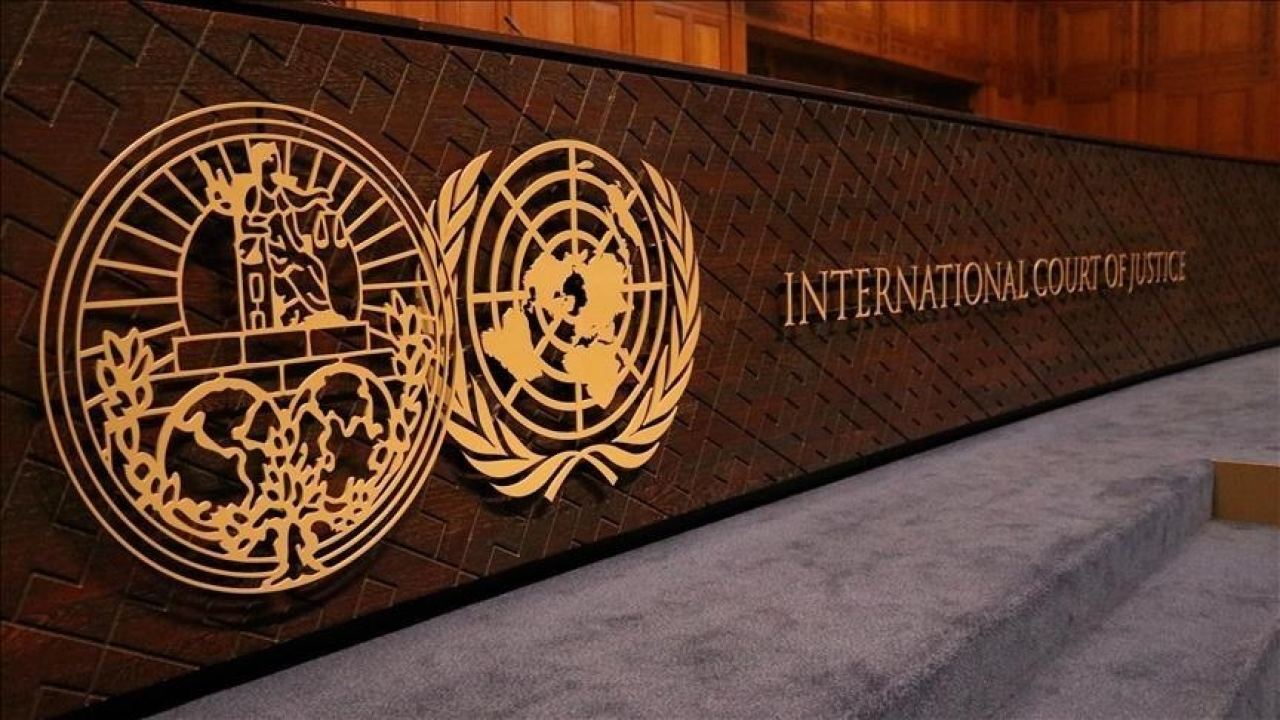
The International Court of Justice (ICJ) is the United Nations' principal judicial body, responsible for settling disputes between states and, when asked by UN bodies, issuing Advisory Opinions that clarify what international law actually requires on major global questions. On 8 July 1996, the ICJ issued exactly this kind of opinion on the legality of nuclear weapons, a ruling that has since gone on to influence everything from disarmament diplomacy to, more recently, the Court's opinion on climate change. This article looks at why that 1996 opinion still matters, what was discussed at the anniversary event marking it, and why the issues it raised, including the future of the Security Council veto, remain directly relevant to UNA NZ's work today.
On 8 July 2026, legal experts, diplomats, parliamentarians, mayors, students, and civil society representatives gathered at the Asser Institute in The Hague to mark the 30th anniversary of that ruling, the ICJ's landmark Advisory Opinion on the Legality of the Threat or Use of Nuclear Weapons.
UNA NZ was proud to be one of 25 cosponsoring organisations supporting the event, The Relevance of International Court of Justice Advisory Opinions: Nuclear Weapons, Climate Change and Other Global Issues, alongside partners from across the peace, disarmament, environment, and human rights sectors. New Zealand's civil society was well represented on that list, with Aotearoa Lawyers for Peace, Peace and Disarmament Collective Aotearoa, and Quaker Peace and Service Aotearoa-New Zealand joining UNA NZ as cosponsors.
That New Zealand presence isn't a coincidence. As The Press (Christchurch) noted in an article published the day before the anniversary, the original campaign to bring the nuclear weapons question before the ICJ owed a great deal to peace movement leaders from Christchurch, whose work through the 1990s helped build the international case that led to the 1996 ruling. That history reflects New Zealand's long-standing leadership on international law and nuclear disarmament, a tradition this event was, in many ways, a continuation of.
Why the 1996 Opinion Still Matters
On 8 July 1996, the ICJ ruled that the threat or use of nuclear weapons is generally contrary to international law, and that all states carry a universal obligation to pursue, and conclude, negotiations toward complete nuclear disarmament.
Alyn Ware, Coordinating Committee member of Abolition 2000 and a New Zealander long involved in disarmament advocacy through Aotearoa Lawyers for Peace, was closely involved in bringing the original case to the Court in the 1990s. Attending the Hague event, he noted that the ruling has helped establish a norm against the use of nuclear weapons, shaped legal protections for future generations, and even inspired the ICJ's more recent Advisory Opinion on states' obligations around climate change. Alyn states that "for us, a small country on the other side of the world against the powerful countries... we found a powerful tool through the ICJ".
But Ware was equally clear that the job isn't finished. Nuclear-armed and allied states still rely on deterrence (the threatened use of nuclear weapons) and have yet to begin serious disarmament negotiations.
The Numbers Behind the Warning
Jackie Cabasso, Executive Director of the Western States Legal Foundation, pointed out that over half the world's population lives in countries whose national security relies on nuclear deterrence. Rather than winding down, nuclear arsenals are being modernised and in some cases expanded: in 2025 alone, the nine nuclear-armed states spent US$119 billion on their arsenals: a 19% increase on the year before, working out to roughly US$3,768 every second.
Younger voices at the event pressed the same point from a different angle. Ayleen Roy, of the Abolition 2000 youth network Youth Fusion, framed it simply: nuclear weapons aren't a historical memory the law is being asked to preserve. They're a live threat the law is being asked to end, ideally before it's inherited by a generation not yet born.
What's Next
Non-nuclear states have already responded to the ICJ's ruling by negotiating the Treaty on the Prohibition of Nuclear Weapons (TPNW). Nuclear-armed and allied states have so far stayed outside it, arguing it doesn't adequately address verification and enforcement. Ware's response at the event was that this isn't a reason for inaction. Those states could still negotiate protocols to the TPNW, begin work on a wider nuclear weapons convention, or agree to a framework setting out obligations and timelines while details are worked out. At minimum, he said, states should commit to eliminating nuclear weapons entirely by no later than 2045, a target already put to the UN in September 2025, and due to be raised again in September 2026, on the International Day for the Total Elimination of Nuclear Weapons.
Two Days at the Asser Institute
The programme ran across five panels over two days. Day one opened with a session on the role of the ICJ and its advisory opinions, followed by further reflections on the 1996 nuclear weapons ruling and a panel dedicated to the Court's newer climate change opinion. The day closed with a conference dinner featuring Judge Juan Manuel Gómez Robledo, a sitting member of the ICJ, among the speakers.
Day two turned to the practical and legal work still ahead. A session on nuclear weapons and international human rights law was followed by a panel on "LAW not War," which looked at strengthening the ICJ's reach and effectiveness more broadly. The programme closed with a walking tour of Hague peace sites and a Mayors for Peace Flag Day commemoration.
One session stood out for UNA NZ given our own recent work on Security Council reform: Panel 5, on the ICJ and the legal limits to the veto. It included a screening of the documentary The Veto, with contributions from the film's director Tim Slade and NYU law professor Jennifer Trahan, author of a study on existing legal limits to Security Council veto power in the face of atrocity crimes. The panel discussed a proposed future ICJ advisory opinion specifically on legal limits to the veto, a question that speaks directly to New Zealand's own long-standing opposition to unchecked veto power at the Security Council, and to UNA NZ's broader commitment to a more effective, accountable, and rules-based multilateral system.
Watch the video statements prepared for the event:
A Tribute to Leaders of the World Court Project on Nuclear Weapons and International Law is a six-minute video message to the Hague event from Dr Kate Dewes and Commander Robert Green (Royal Navy, retired), two of the key figures behind the original campaign to bring the nuclear weapons question before the ICJ in the 1990s.
The Relevance of the ICJ Advisory Opinion on Climate Change is a statement from Vishal Prasad, Campaign Director of Pacific Island Students Fighting Climate Change, one of the youth organisations most closely involved in bringing the climate change question before the ICJ.
Judge Weeramantry and the ICJ Cases on Nuclear Weapons and Climate Change is a message from Solomon Yeo, also of Pacific Island Students Fighting Climate Change, reflecting on the legacy of Judge Christopher Weeramantry across both the nuclear weapons and climate change cases.
The Caribbean States, Future Generations and the ICJ Advisory Opinion on Climate Change is a message from Justin Sobion, Coordinator of the Caribbean group at the ICJ climate change hearings and Secretary of the Earth Trusteeship Working Group.
Thirty Years On, Still Setting the Direction
Three decades after it was delivered, the 1996 Advisory Opinion continues to do more than mark an anniversary. It remains a live reference point in nuclear disarmament debates, and its influence reaches well beyond nuclear weapons: the legal reasoning it established helped pave the way for the ICJ's recent Advisory Opinion on climate change, and is now feeding into growing calls for the Court to weigh in on the legal limits of the Security Council veto. Taken together, these threads point to the same underlying idea: that international law, applied consistently and taken seriously by all states, remains one of the most powerful tools available for addressing the world's biggest shared challenges. That's a principle UNA NZ will keep advocating for, in disarmament, in Security Council reform, and everywhere else it matters.
Further reading and viewing:
For those who want to go deeper, the event page hosts a substantial archive of background material. Highlights include The People v the Bomb: Judgement at the Hague, a 1996 documentary featuring footage of the original oral hearings and interviews with key figures including Joseph Rotblat, Kate Dewes, and Daniel Ellsberg; a 2021 talk by Alyn Ware on how the World Court Project campaign persuaded the nuclear-armed states to face the Court, and won; and Why the Nuclear Danger Grows Day by Day, an essay by the late Judge Christopher Weeramantry, who wrote a comprehensive dissenting opinion in the original 1996 case.
More background, video, and reading is available on the event page.

For us, a small country on the other side of the world against the powerful countries... we found a powerful tool through the ICJ"
International Court of Justice