
International Day of Non-Violence
2 October 2026
International Day of Non-Violence
Observed annually on 2 October, the International Day of Non-Violence marks the birthday of Mahatma Gandhi, leader of the Indian independence movement and a pioneering figure in the philosophy and practice of non-violent resistance.
The day was established by United Nations General Assembly resolution A/RES/61/271 in 2007, with the aim of disseminating the message of non-violence through education and public awareness, and reaffirming what the resolution describes as the universal relevance of non-violence as a principle for building a culture of peace, tolerance, and understanding.
Gandhi's Legacy
Gandhi remained committed to non-violence throughout his life, even in the face of oppressive conditions and significant adversity. Central to his approach was the belief that "just means lead to just ends", the conviction that violence can never be an effective path to a genuinely peaceful society. This philosophy guided campaigns such as the 1930 Salt March, and has since inspired non-violent movements for civil rights and social change across the globe.
As Gandhi himself expressed it, non-violence is "the greatest force at the disposal of mankind. It is mightier than the mightiest weapon of destruction devised by the ingenuity of man."
Why This Day Matters
Non-violent resistance, often described as the politics of ordinary people, has been adopted in movements worldwide as a means of pursuing social justice without resorting to force. It generally takes one of three forms: protest and persuasion, non-cooperation, or non-violent intervention.
In marking this day, the United Nations and communities around the world reaffirm a shared commitment to resolving conflict through dialogue, dignity, and peaceful means, principles as relevant today as they were in Gandhi's time.

"There is no way to peace, peace is the way." — Mahatma Gandhi
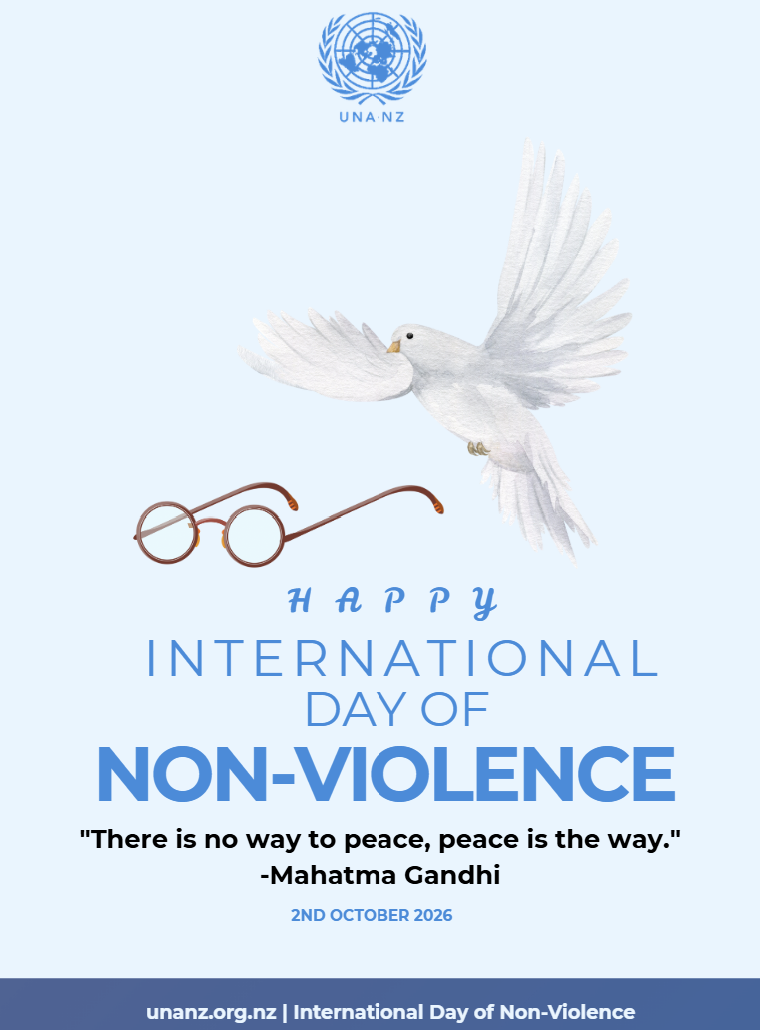
International Day of Non-Violence